

What Are Management Accounts?
Management accounts are regular financial reports – typically prepared monthly or quarterly – that give you a real-time view of how your business is performing.
Unlike your year-end statutory accounts (which look backward and arrive months after the period ends), management accounts are designed for decision-making right now. Think of them as your business dashboard. A pilot doesn't fly without instruments. A business owner shouldn't either.
"Management accounts are the difference between running your business and guessing your way through it."
Ben Brierley
Co-gency AccountantsWhat a Good Management Accounts Pack Includes
At Co-gency Chartered Certified Accountants, we tailor management accounts to each client's needs. The core pack includes:
Profit & Loss (P&L)
Revenue, cost of sales, gross profit, overheads, and net profit for the period – compared to prior period and budget.
Balance Sheet
A snapshot of what your business owns, owes, and is truly worth at the exact reporting date.
Cash Flow Statement
Actual cash in and out – fundamentally different from profit, and arguably more important.
Cash Flow Forecast
Forward-looking 13-week rolling view of cash. Spot shortages and bottlenecks before they happen.
EBITDA & True Profit
We go beyond standard reporting to extract the true underlying cash-generative performance.
KPI Dashboard
Financial and non-financial KPIs meticulously tailored to track your specific business aims.
Aged Debtors
Who owes you, how long they've owed you, and what you owe – essential for cash management.
Commentary & Actions
A plain-English summary of what the numbers actually mean and what requires your immediate attention.
EBITDA: Understanding What Your Business Really Earns
This is where Co-gency goes significantly further than standard management accounts.
What is EBITDA?
Earnings Before Interest, Tax, Depreciation and Amortisation. It strips out financing decisions, tax planning, and accounting adjustments to show underlying performance. It's the number buyers, investors, and lenders use.
Why it matters: Two businesses with identical revenues can have very different net profits depending on how they're financed and structured. EBITDA lets you compare true operating performance.
EBITDA + Director Drawings = True Profit
For owner-managed businesses, EBITDA alone doesn't tell the full story. We calculate Adjusted EBITDA – adding back all director and shareholder drawings to show true profit-generating capacity before owner extraction.
| Component | What it shows |
|---|---|
| Net profit (per P&L) | After all costs including owner remuneration |
| + Depreciation & amortisation | Non-cash charges added back |
| + Interest charges | Financing costs added back |
| + Tax charge | Tax added back |
| = EBITDA | Operating earnings before financing/tax/non-cash |
| + Director salaries | Owner remuneration added back |
| + Dividend payments | Owner distributions added back |
| + Pension contributions | Owner pension added back |
| + Benefits in kind | Car, health insurance, etc. added back |
| = Adjusted EBITDA | True profit generation before any owner extraction |
KPIs – Financial and Non-Financial
We don't apply a standard KPI template. The most powerful management information is built around what actually matters to your specific business aims and critical success factors.
Standard KPI Pack
Core financial metrics every business needs:
- Revenue (total and by period)
- Gross profit margin & Net profit margin %
- EBITDA and Adjusted EBITDA (inc. director drawings)
- Monthly recurring revenue (MRR)
- Cash balance and cash runway
- Debtor days and creditor days
- Current ratio (solvency check)
- Revenue per employee
- Budget vs actual variance
Advanced KPI Pack
Deep-dive analysis for growth-focused businesses:
- Sales and margin by individual customer
- Sales and margin by geography
- Sales and margin by vendor or product line
- Customer acquisition cost (CAC) and LTV
- Pipeline value and conversion rates
- Project or job profitability
- Utilisation rates (for service businesses)
- Custom Non-financial KPIs (see below)
Sector Non-Financial KPIs
Not everything that matters can be measured in pounds. Tracking non-financial indicators gives you earlier warning of what's coming before it hits the P&L.
Construction
Jobs tendered vs won, site utilisation, subcontractor availability, snag/defect rates, H&S incidents.
Healthcare
Patient/client numbers, appointment utilisation, referral rates, waiting times, CQC compliance scores.
Hospitality
Covers per week, average spend per head, table turn rate, staff hours per cover, occupancy %.
Property
Occupancy/void rates, rent collection %, yield per property, maintenance cost per unit, tenant retention.
Manufacturing
Output per shift, scrap/wastage rate, on-time delivery %, machine downtime, order backlog.
Info. Technology
Monthly recurring revenue, churn rate, support ticket resolution time, project utilisation, uptime %.
Transportation
Fleet utilisation, cost per mile, on-time delivery %, fuel efficiency, vehicle downtime.
Wholesale
Stock turnover, order fulfilment rate, average order value, returns rate, warehouse efficiency.
Prof. Services
Billable hours, utilisation %, realisation rate, proposal win rate, client satisfaction (NPS).
Budgets, Financial Models & Variance Reporting
We build a forward-looking financial model based on your business plan, growth assumptions, and cost structure. This turns your management accounts into a proper board pack.
Actual vs Budget Reporting
Once your budget is set, every monthly pack includes a full actual vs budget comparison. This turns reporting from a historical record into a forward-looking control tool.
"The real value of actual vs budget reporting isn't in the numbers themselves – it's in the conversation they create. Every month we sit down, go through variances, understand why they happened, and agree what to do about them."
Example Variance Analysis
| Line item | Budget | Actual | Variance | Variance % | Commentary |
|---|---|---|---|---|---|
| Revenue | £85,000 | £91,200 | +£6,200 | +7.3% | New client signed in month |
| Cost of sales | £34,000 | £37,400 | -£3,400 | -10.0% | Higher subcontractor costs |
| Gross profit | £51,000 | £53,800 | +£2,800 | +5.5% | Margin slightly below target |
| Overheads | £28,000 | £27,100 | +£900 | +3.2% | Under on marketing spend |
| EBITDA | £23,000 | £26,700 | +£3,700 | +16.1% | Strong month overall |
The 8 Core KPIs Every SME Should Track Monthly
Regardless of your sector or stage, these eight metrics should be in every pack as a minimum baseline.
Gross Profit Margin
Tells you how efficiently you're delivering. A declining margin is an early warning sign before it reaches your bottom line.
EBITDA Margin
Operating earnings as a percentage of revenue. The benchmark lenders and buyers use to assess business health.
Adjusted EBITDA
True profit generation before owner extraction. Essential for owner-managed businesses.
Monthly Recurring Rev.
The foundation of value. The higher your MRR, the more stable and valuable the business.
Cash Runway
Cash balance ÷ monthly net outflow. Below 3 months is a red alert. Know this number at all times.
Debtor Days
How long customers take to pay. Rising debtor days is the most common cause of cash flow problems.
Budget vs Actual
Are you on track? Variances of more than 10% need a conversation and an explanation.
Rev. per Employee
Total revenue ÷ headcount. Compare to prior periods and industry benchmarks to spot efficiency trends.
How to Spot Cash Flow Problems Before They Happen
More businesses fail from cash flow problems than from lack of profitability. Watch for these warning signs in your monthly accounts:
-
Revenue growing but cash declining
Debtor days are rising – customers are taking longer to pay. Check aged debtors immediately.
-
Gross margin declining month-on-month
Costs rising faster than prices, or winning lower-margin work. Needs investigation.
-
Cash runway below 3 months
Red alert. Immediate action required – accelerate collections, arrange facilities, or reduce costs.
Co-gency delivers management accounts within 7 working days of month-end – early enough to act on issues before they become crises.
When the Numbers Say You're Ready to Hire
"Can I afford to take on staff?" Here's a framework based on your management accounts and budget:
| Indicator | Green Light | Red Light |
|---|---|---|
| Revenue trend | 3+ months growth vs budget | Flat or below budget |
| EBITDA margin | Stable or improving | Declining month-on-month |
| Cash runway | 6+ months | Under 3 months |
| Debtor days | Under 45 days | Over 60 days & rising |
| Utilisation (service) | Turning away work | Capacity available |
4 or more green lights = the numbers support hiring. If you're hitting red lights, stabilise first.
Your One-Page Financial Dashboard Template
Use this as a starting point for your monthly management review. Co-gency will build this into your live reporting within 2 weeks of onboarding.
| Metric | This Month | Last Month | Budget | Variance | YTD |
|---|---|---|---|---|---|
| Revenue | £ | £ | £ | £ / % | £ |
| Gross Profit | £ | £ | £ | £ / % | £ |
| Gross Margin % | % | % | % | % | % |
| EBITDA | £ | £ | £ | £ / % | £ |
| Adjusted EBITDA* | £ | £ | £ | £ / % | £ |
| Net Profit | £ | £ | £ | £ / % | £ |
| Cash Balance | £ | £ | – | – | – |
| Cash Runway | months | months | – | – | – |
| Debtor Days | days | days | – | – | – |
| MRR | £ | £ | £ | £ / % | £ |
| Revenue per Head | £ | £ | £ | – | – |
| Top KPI 1 | |||||
| Top KPI 2 | |||||
| Top KPI 3 |
* Adjusted EBITDA = EBITDA + director salaries + dividends + pension contributions + benefits in kind
Latest Insights on Management Accounts
Expert advice to help you understand your numbers, control your cash flow, and scale your business with confidence.

EBITDA Explained: What It Really Tells You About Your Business
Learn what EBITDA means, how to calculate it, and why Adjusted EBITDA is the metric that matters most for owner-managed businesses.
Read Article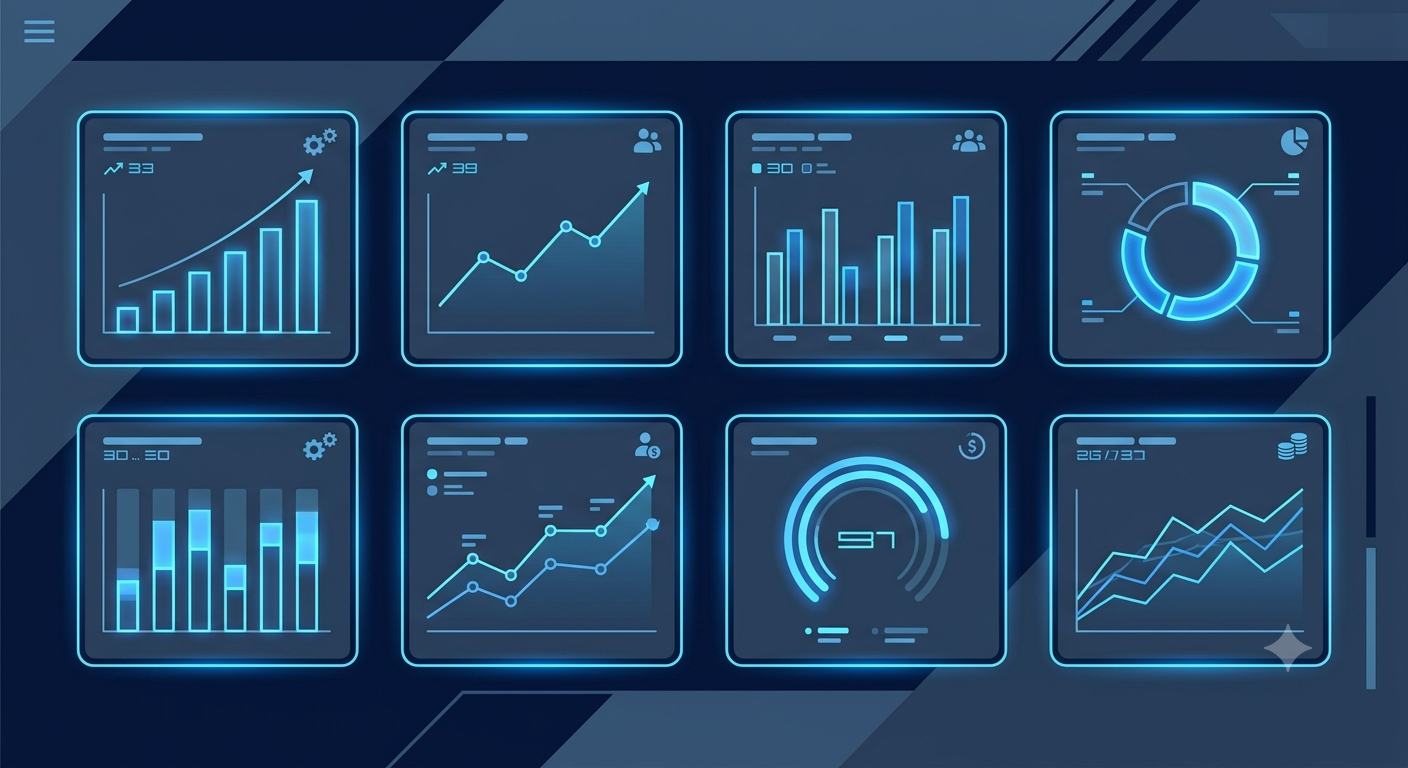
The 8 Financial KPIs Every Growing Business Should Track
From gross margin to cash runway and debtor days, discover the essential numbers you need to review every single month.
Read Article
Why Non-Financial KPIs Are the Key to Real Growth
Financials tell you what happened. Leading indicators tell you what's coming. Learn how to track sector-specific metrics to predict future revenue.
Read Article
Why Profitable Businesses Still Run Out of Cash
Profit isn't cash. Learn the warning signs of a cash flow crisis hidden in your accounts – and how to catch them before they become serious.
Read Article
How Variance Reporting Turns Accounts Into a Growth Tool
Actual vs budget reporting transforms your accounts from a history lesson into a powerful control tool to drive better decisions.
Read ArticleFrequently Asked Questions
Quick answers about how our management accounts service works.
Ready to Get Started?
Co-gency provides management accounts and board packs for growing businesses across Manchester, Salford, Worsley, and the wider North West.
Our service is built around your specific aims and objectives – not a generic template. We connect to your Xero or QuickBooks, build your KPI framework, deliver your monthly pack within 7 working days, and talk you through the numbers on a monthly review call.
- Monthly P&L, balance sheet, cash flow forecast
- EBITDA and Adjusted EBITDA reporting
- Financial and non-financial KPI dashboard
- Monthly review call with your accountant
- Board pack preparation for investors/lenders
- 30-day money-back guarantee
Book a Free 30-Minute Call
Complete the form below to book your consultation and get a copy of the Starter Guide.